How the day began
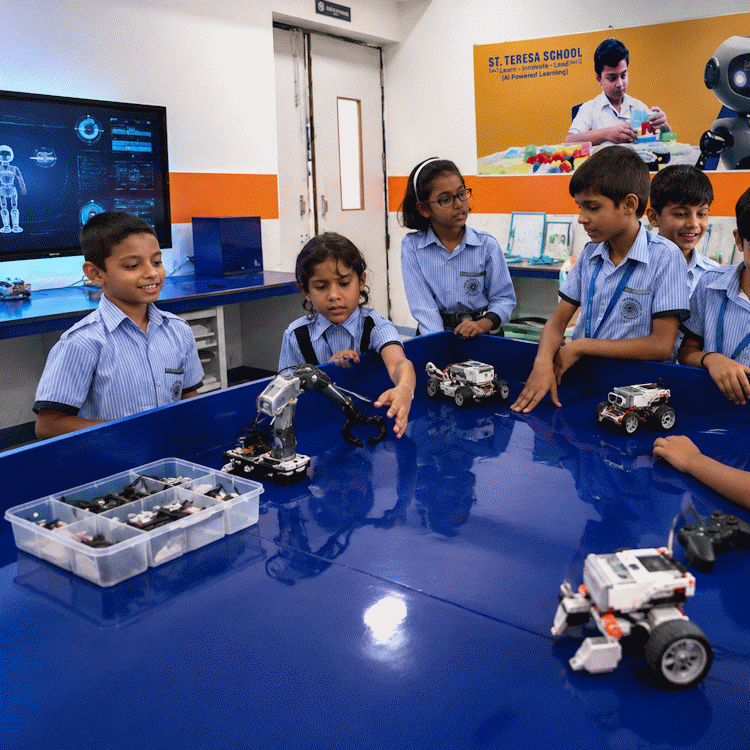
The workshop began at 9:00 a.m. in the AI & Robotics Lab, with 48 students from Classes VI to X attending across the morning. It opened with a short demonstration of a robot tracing a black track taped across the lab floor, and a simple question to the room: how does it know where to turn?
That question led into a twenty-minute discussion on sensors, signals and instructions. Students were then divided into twelve teams of four, and each team collected a kit containing a controller board, two geared motors, a chassis plate and a pair of infrared sensors.
Building the robot
Students spent the first session assembling the chassis, fixing the motors and mounting the sensor at the correct height. Teachers moved between tables, helping teams check their wiring before power was switched on.
The build stage encouraged patience and teamwork — every member had a role, from reading the instructions aloud to tightening the fittings.
Writing the first program
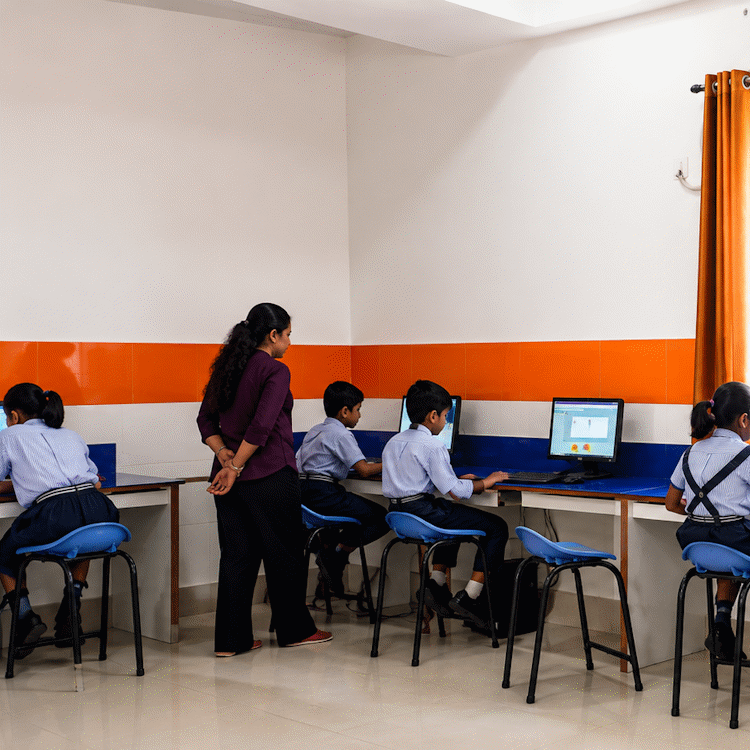
In the second session, students moved to the computers and used a block-based editor to write their control logic. They learned how an if–else decision lets the robot steer left or right based on what the sensor detects.
Programs were uploaded, tested on the practice track and refined. Many teams discovered that small changes in motor speed made a large difference to how smoothly the robot followed the line.
The final run
The workshop closed with a friendly track challenge. Every team completed the course, and students explained to their classmates what they had changed to make their robot faster or more stable.
The session ended with a discussion on where similar technology is used in everyday life, from automatic doors to driverless vehicles.